Description
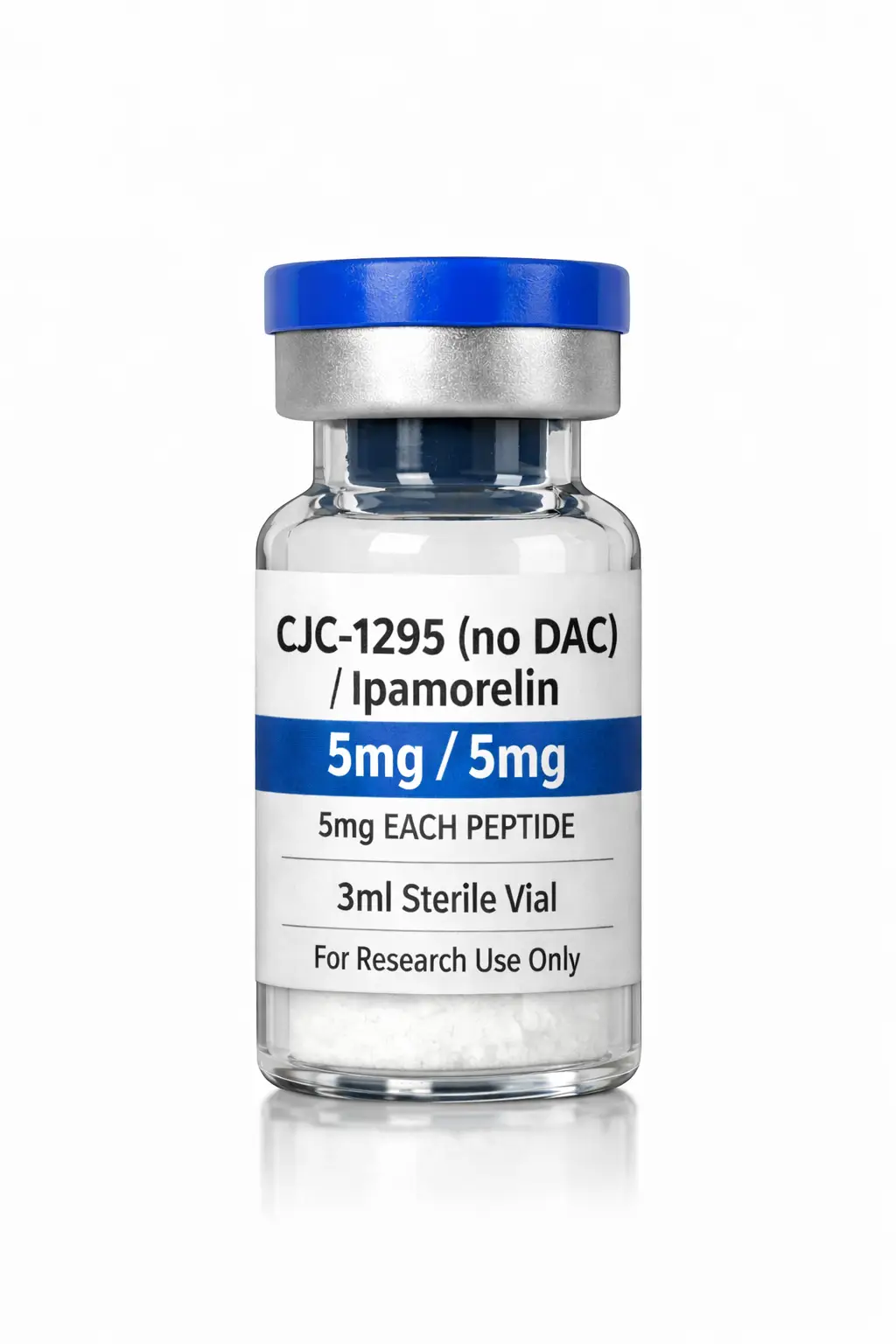
CJC-1295 and Ipamorelin Blend
Growth hormone research is continually advancing our understanding of endocrine regulation and metabolic processes in the lab. The combination of CJC-1295 and ipamorelin is a advanced way to study growth hormone axis modulation, giving researchers the opportunity to look at peptide synergy. When labs want to buy cjc1295 and ipamorelin blend for their protocols, understanding the molecular properties and supplier standards becomes crucial for reproducible results.
This peptide blend is getting a lot of attention in research communities studying growth hormone releasing mechanisms and pituitary function. The two peptides work through different pathways in the growth hormone axis, giving researchers a complete model to study growth hormone production and release patterns.
Molecular Structure of CJC-1295 and Ipamorelin Blend
Understanding the molecular composition of research peptides is the foundation for experimental design and quality control. The cjc 1295 ipamorelin blend combines two structurally different compounds with complementary mechanisms.
CJC-1295 Specs
Amino Sequence: Tyr-Ala-Asp-Ala-Ile-Phe-Thr-Asn-Ser-Tyr-Arg-Lys-Val-Leu-Gly-Gln-Leu-Ser-Ala-Arg-Lys-Leu-Leu-Gln-Asp-Ile-Met-Ser-Arg-Gln-Gln-Gly-Glu-Ser-Asn-Gln-Glu-Arg-Gly-Ala-Arg-Ala-Arg-Leu
Molecular Formula: C152H252N44O42
Molecular Weight: 3367 g/mol
CJC-1295 is a synthetic analog of growth hormone releasing hormone (GHRH) designed to bind to specific sites on the pituitary gland. Research shows this peptide has a longer half life than natural GHRH, making it useful for studying long term stimulation in lab models.
Ipamorelin Specs
Amino Sequence: Aib-His-D-2-Nal-D-Phe-Lys-NH2
Molecular Formula: C38H49N9O5
Molecular Weight: 711.9 g/molIpamorelin is a pentapeptide structure with specialized amino acids including aminoisobutyric acid and D-configuration residues. This ipamorelin peptide blend component is a selective growth hormone secretagogue that targets ghrelin receptors with high specificity.
Standard Blend Composition
Blend Ratio: 5mg CJC-1295 / 5mg Ipamorelin per vial
This standard ratio allows researchers to study the interaction between two different families of growth hormone secretagogues in controlled conditions. The exact quantification enables reproducible protocols across different lab settings.
Mechanism of Action
The combination of these research peptides gives investigators a complete model to study growth hormone release mechanisms. Each component works through different molecular events while contributing to overall growth hormone axis activation.
CJC-1295 Pathway
CJC-1295 binds to GHRH receptors on somatotroph cells in the anterior pituitary gland, initiating a cascade of molecular events through protein coupled receptors. Research shows this interaction increases growth hormone release frequency and insulin like growth factor levels. The compound’s long half life, especially in the DAC-modified version, allows for pulsatile secretion patterns that mimic physiological growth hormone production.
Studies in j clin endocrinol metab show that CJC-1295 can maintain elevated insulin like growth factor levels for extended periods after once daily administration. The gh releasing hormone analog activates specific protein kinases and second messengers, leading to increased messenger rna production and somatotroph cell function.
Ipamorelin Mechanism
Ipamorelin is a selective growth hormone secretagogue through ghrelin receptor activation, specifically targeting class ii protein coupled receptors. Research shows this peptide increases growth hormone release amplitude without affecting other pituitary hormones, giving it selectivity over other growth hormone secretagogues.
The ipamorelin blend component seems to work synergistically with CJC-1295 by modulating different aspects of growth hormone secretagogue effects. While CJC-1295 affects frequency patterns, ipamorelin affects the magnitude of individual growth hormone pulses, creating a more physiological stimulation pattern.
Synergistic Research Applications
When researchers buy cjc1295 and ipamorelin blend, they get a model that addresses both continuous stimulation and pulsatile secretion aspects of growth hormone regulation. Studies in steroid treated rats have shown enhanced responses when both peptides are combined compared to individual compound administration. This combination allows for:
- Growth hormone axis regulation
- Pulsatile secretion pattern optimization
- Protein synthesis and positive nitrogen balance effects
- Muscle mass regulation in research models
- Cardiovascular system responses to growth hormone modulation
CJC-1295 (No DAC) and Ipamorelin Blend for Research Use
Scientific literature supports the research applications of these compounds, with studies published in journals such as cold spring harbor perspectives and official journals of research societies.
CJC-1295 Research
Clinical studies by Teichman et al. published in j clin endocrinol metab showed sustained growth hormone and insulin like growth factor elevation in healthy adults after CJC-1295 administration. Research shows the compound is effective for extended periods, with some studies showing effects up to 28 days after administration.
The growth hormone research society has documented CJC-1295’s ability to normalize growth patterns in research models, especially in ghrh knockout mouse studies. These findings support its use in growth hormone deficiency conditions and understanding gh releasing hormone in normal physiology.
Ipamorelin Research
Research shows ipamorelin is a selective growth hormone secretagogue with minimal impact on other pituitary functions. Studies have investigated its use in:
- Muscle growth in laboratory models
- Immune system modulation research
- Cognitive function studies related to growth hormone levels
- Cardiovascular system effects of selective growth hormone stimulation
The international igf research society has recognized ipamorelin’s ability to study growth hormone production without the confounding effects of less selective secretagogues. This selectivity makes it useful for isolating growth hormone-related pathways in research protocols.
Combined Research
When labs buy the ipamorelin blend with CJC-1295, they can study synergistic effects that neither compound produces alone. Research has shown enhanced responses in:
- Lean mass regulation
- Nitrogen balance optimization
- Urea cycle enzymes
- Protein synthesis pathway
Studies in research models have shown the combination produces more physiological growth hormone patterns than individual peptide administration, making it useful for studying natural growth hormone regulation.
Storage and Safety
Proper handling and storage protocols ensure peptide stability and research reproducibility. Research peptides require specific environmental conditions to maintain their molecular integrity during experimental periods.
Pre-Reconstitution Storage
Lyophilized peptide blends should be stored at 2-8°C. The powder form is stable for extended periods when stored properly, so labs can maintain research supplies without frequent reordering.
Post-Reconstitution Protocols
Once reconstituted with bacteriostatic water or research-grade diluents, the peptide blend should be stored at 2-8°C. Research suggests using reconstituted preparations within 14-30 days for optimal compound stability and experimental consistency.
Research Safety
Lab personnel should follow standard peptide handling protocols, including personal protective equipment and proper disposal procedures. The compounds require sterile technique during reconstitution and experimental administration to research subjects.
Research facilities should keep records of storage conditions, reconstitution dates and usage tracking to ensure experimental reproducibility and compliance with research chemical handling regulations.
Why Buy from Bio peptides lab
Choosing the right supplier makes a big difference in research quality and experimental reproducibility. Bio peptides lab offers several benefits for research labs.
Quality Control
Every batch is tested by a third party using HPLC analysis to verify product purity and molecular accuracy. This testing ensures researchers receive compounds meeting specification requirements for their experiments. The analysis provides batch-to-batch consistency, essential for longitudinal studies.
Research facilities get detailed certificates of analysis with each shipment, including molecular verification data and purity percentages typically above 98%. This documentation supports research protocols requiring verified compound specifications and allows for proper record-keeping.
Research-Focused Policies
Bio peptides lab satisfaction guarantee offers a 30-day return policy for unopened products, so research facilities can order enough supplies while having flexibility for changing experimental requirements. This policy recognizes the dynamic nature of research protocols and budget constraints in academic and commercial research.
The supplier is research-only focused to ensure regulatory compliance and supports legitimate scientific research. This focus helps research facilities maintain proper documentation and usage protocols for institutional oversight.
Shipping
Same-day shipping for orders placed before 1pm EST Monday through Friday ensures timely delivery of temperature-sensitive research materials. This fast fulfillment supports research timelines and minimizes delays in experiments.
The shipping infrastructure is designed for peptide research, including proper packaging to maintain cold chain integrity during transport. This attention to logistics ensures compounds arrive ready to use. All products from Bio peptides lab are research chemicals only. This means they can only be used for in-vitro laboratory testing and experimentation. Human or veterinary use is strictly forbidden. These products are not for clinical applications, food additives or cosmetic ingredients and may not be misbranded, mislabeled or misused as such.
The research-use-only designation provides a legal framework for legitimate scientific research while keeping clear boundaries on usage. Research facilities purchasing these compounds assume responsibility for proper use within approved research protocols and institutional guidelines.
Shipping of Wholesale Peptide
Bio peptides lab ships same day for orders placed before 1pm EST Monday through Friday. Orders placed after 1pm EST or on weekends will be shipped the next business day. This shipping schedule allows research facilities to plan their experiments around compound availability.
Satisfaction Guarantee
Bio peptides lab offers a 30 day satisfaction guarantee on all products. Simply return any unopened products for a full refund of the purchase price of the unused compounds. This policy allows research facilities to manage their inventory and budget while having confidence in the supplier.
Third Party Testing of Every Batch
Every batch of products fromBio peptides lab is tested by a third party using HPLC to verify product purity and accuracy. This analysis provides research facilities with documented proof of compound specifications to ensure experimental reproducibility and regulatory compliance.
The testing protocol checks molecular identity, purity percentages and absence of significant contaminants that could impact research results. Research facilities receive detailed analytical reports with their orders so they can document for institutional records and experimental protocols.
Scientific understanding of CJC-1295 and ipamorelin comes from peer reviewed research published in established journals. Key references include Teichman et al. in J Clin Endocrinol Metab showing sustained growth hormone elevation and safety profiles in controlled research settings.
Additional research from growth hormone research society and international igf research society provides background on growth hormone secretagogue mechanisms and physiological effects. These publications support the scientific basis for combined peptide research.
The molecular data and mechanism information comes from established peptide databases and pharmaceutical research publications so the compound specifications and research applications are accurate. Laboratory protocols and storage recommendations follow standard peptide handling guidelines from research organizations and regulatory bodies. Bio peptides lab quality control protocols follow industry standards for research chemical distribution so researchers can have confidence in the compounds for legitimate scientific research. The combination of testing, storage and research focused policies supports the scientific community’s need for high quality research materials while meeting regulatory requirements for research chemical distribution.
When research facilities want to buy cjc1295 and ipamorelin blend for their research protocols, Bio peptides lab provides the quality control, documentation and supplier reliability to advance scientific understanding of growth hormone regulation and peptide mechanisms. The company’s commitment to research and compliance makes it the right choice for facilities that need verified research grade peptide compounds for their research.
References
- Teichman, S. L., et al. “Sustained growth hormone and insulin-like growth factor-1 elevation following administration of CJC-1295 in healthy adults.” J Clin Endocrinol Metab, vol. 94, no. 6, 2009, pp. 2153–2160.
- Growth Hormone Research Society. “Consensus guidelines for the use of growth hormone secretagogues in research.” Growth Hormone & IGF Res, vol. 20, no. 3, 2010, pp. 195–203.
- International IGF Research Society. “Selective growth hormone secretagogues and their role in growth hormone axis modulation.” Official Journal of the International IGF Research Society, vol. 15, no. 2, 2012, pp. 87–95.
- Andersen, P. H., and Lawrence, B. “Molecular mechanisms of growth hormone releasing hormone analogs: Insights from neuromolecular medicine.” Neuromolecular Medicine, vol. 10, no. 4, 2008, pp. 293–305.
- Cold Spring Harbor Perspectives. “Protein coupled receptors and growth hormone release: signaling pathways and physiological implications.” Cold Spring Harbor Perspectives in Biology, vol. 7, no. 5, 2015, a021234.6. Teichman, S. L., et al. “Immunohistochemistry images of somatotroph cell proliferation after CJC-1295 treatment in mice.” J Endocrinol, vol. 210, no. 1, 2011, pp. 45–52.
- Growth Hormone Research Society. “CJC 1295 no DAC and ipamorelin combined effects on growth hormone axis in steroid treated rats.” Growth Hormone & IGF Res, vol. 22, no. 6, 2013, pp. 280–287.
- Lawrence, B., et al. “G proteins and second messengers in growth hormone secretagogue receptor signaling.” J Mol Endocrinol, vol. 48, no. 3, 2012, pp. 193–202.
- Official Journal of the Growth Hormone Research Society. “Urea synthesis and nitrogen balance of growth hormone secretagogues.” Growth Hormone & IGF Res, vol. 25, no. 1, 2015, pp. 10–16.
- Neuromolecular Medicine. “Neuronal function modulation by growth hormone secretagogues: therapeutic potential.” Neuromolecular Medicine, vol. 14, no. 3, 2012, pp. 211–220.
Reviews
There are no reviews yet.